Case Study
Squamish Nation
Working alongside Squamish Nation’s communications team and community, we developed a website through conversation, participatory review, and deliberate space for decisions to take shape.
When we began working with Squamish Nation, its existing website was causing frustration. The technology was unreliable, and there was little reason for some Nation Members to feel enthusiastic about another website project. We needed to understand what would make the next one worth using.
We worked alongside the communications team and made room for different perspectives: Elders, youth, staff, leaders, and members living in different places. Interviews and participatory sessions helped us hear what people needed, where the existing experience fell short, and what they wanted to recognize when they arrived online.
This project asked us to work in a circle and alongside a larger communications team. It also taught us something about timing. Where shared agreement mattered to the next decision, moving quickly was not always the most useful thing we could do.
We made deliberate space to show developing work, invite responses, and take what we heard back into the design. Some decisions needed another conversation. Some needed people who had not yet been in the room. The communications team helped us understand those needs, and we adjusted the way the project moved.
The Communications Manager described a concrete result of that attention: “Harc’s deep listening approach helped us achieve a custom project plan.” Having a plan shaped around this team and its relationships gave us a way to keep the work moving while making room for the conversations it still needed.
That pace belonged to this project and its relationships. We learned to make a distinction between a project losing momentum and a project intentionally slowing down so that people could meaningfully shape what happened next. There can be a great deal of purpose in the latter.
We drew the digital strategy from the contributions Nation Members made. Clearer navigation and quick-access member links could help with everyday tasks. Community imagery could make the site feel more recognizable. Language features and a video-led homepage could bring more of the Nation’s living presence into the experience.
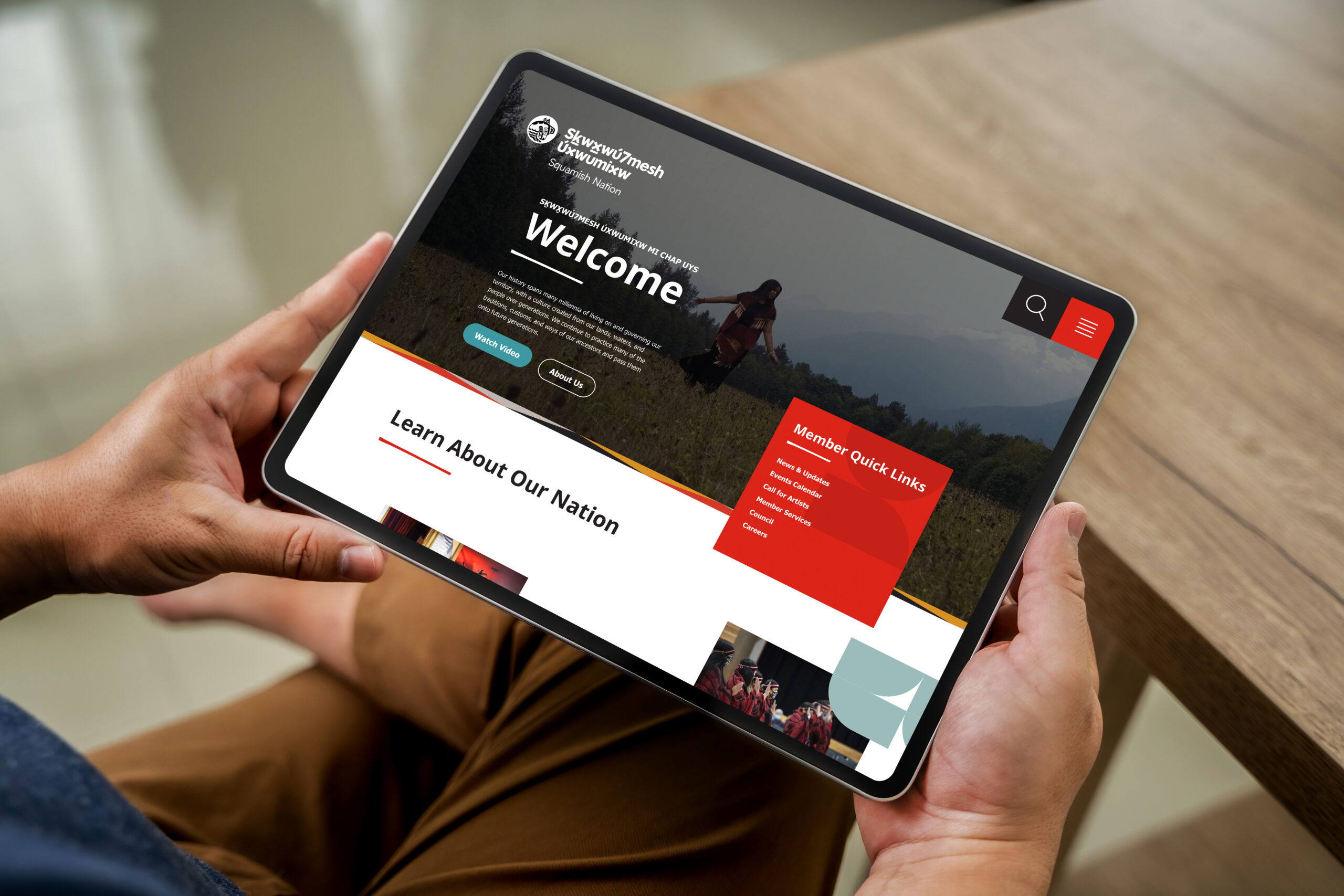
The homepage design brings community imagery, a clear welcome, and routes into the Nation’s information together.
We developed the prototype and returned to members for review at several stages. That gave us opportunities to test the structure and adjust before decisions became harder to change. As the Communications Manager put it, “Collaborating with Parker and Jarren encouraged us to explore different ideas and approaches.” There was room to consider a possibility before committing to it.
We stayed responsible for carrying that exploration into a finished site. The Communications Manager also noted, “Parker and Jarren demonstrated a commitment to the project’s completion.” The result was a custom, responsive WordPress website built around the direction that had emerged together.
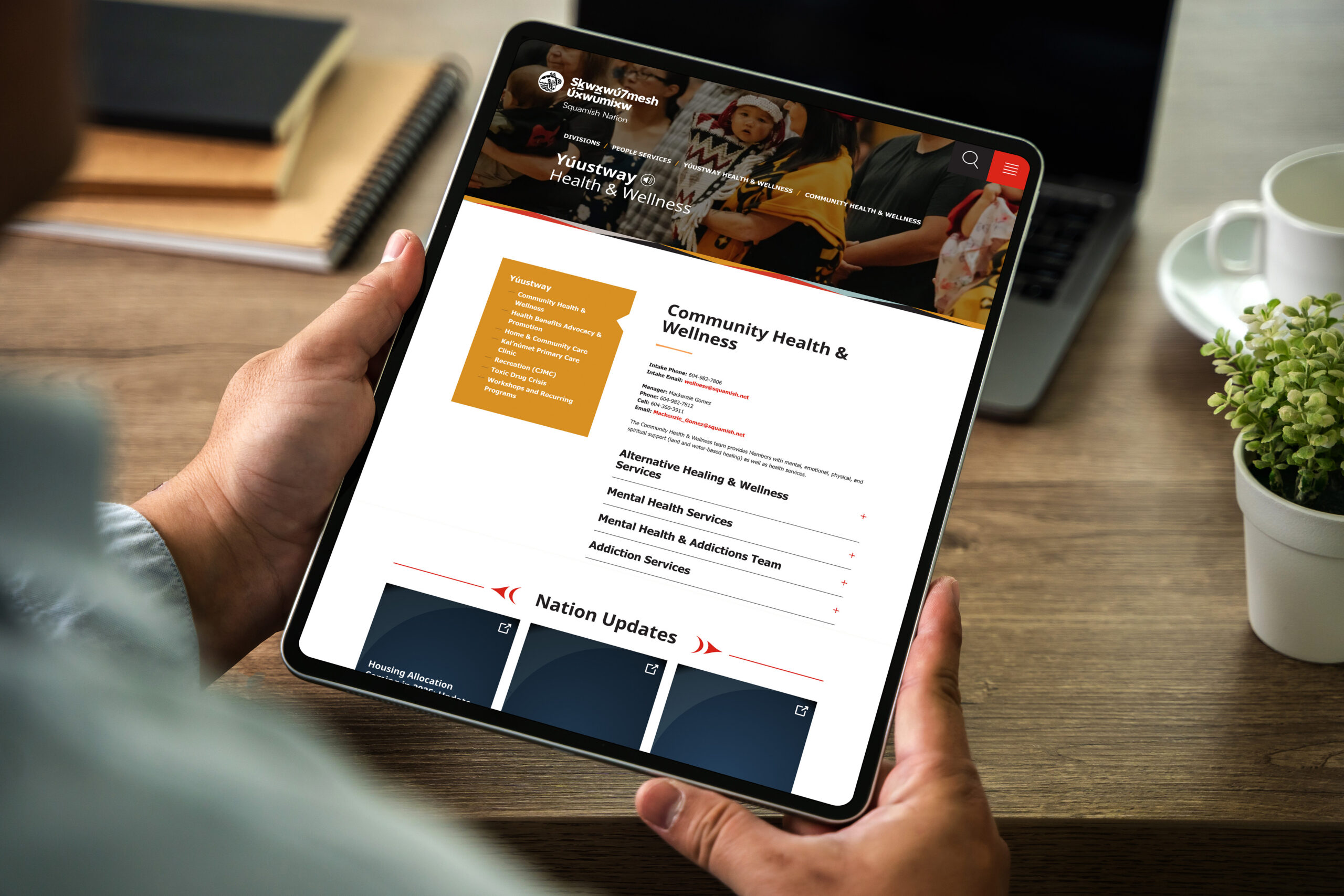
The site’s information and member-focused routes remain accessible within the portrait tablet layout.
We came away with more than a completed website. Working with the Nation changed our understanding of what a good project path can look like. It gave us a more attentive relationship to participation, review, and the moments when a pause makes the next step better.
We are grateful for that learning, and for the communications team’s partnership in the work. The finished website carries the practical outcomes of those conversations. Our practice carries the experience of making it with them.

Harc didn’t offer a ‘solution in a box’—they helped us focus and come to our own realizations.


Harc will inspire you to think and dream, and the end result will be better than you imagined.


Harc brought forward beautiful, well-researched ideas, resulting in a brand I’m proud to share with the world.


Harc is a great partner for organizations who not only want to be understood, but also to better understand themselves.


The Harc team is intuitive, creative, and strategic while infusing magic and delight into everything they do.


Parker and Jarren became part of our team, showing up in a meaningful way and bringing our story to life through deep understanding.


Working with Harc was like going on a guided journey into understanding and expressing who we are as a company.


Harc’s coaching has helped me see and design my own methods and practices to be successful with a clearer, more confident approach. As a result, I am engaging both my business and my life at a higher level.

A clear brief is welcome. A gloriously untidy first thought is welcome too. Tell us what you’re making, changing or trying to say. We’ll help work out what happens next.