When OVMA came to us, the veterinary profession was carrying a lot.
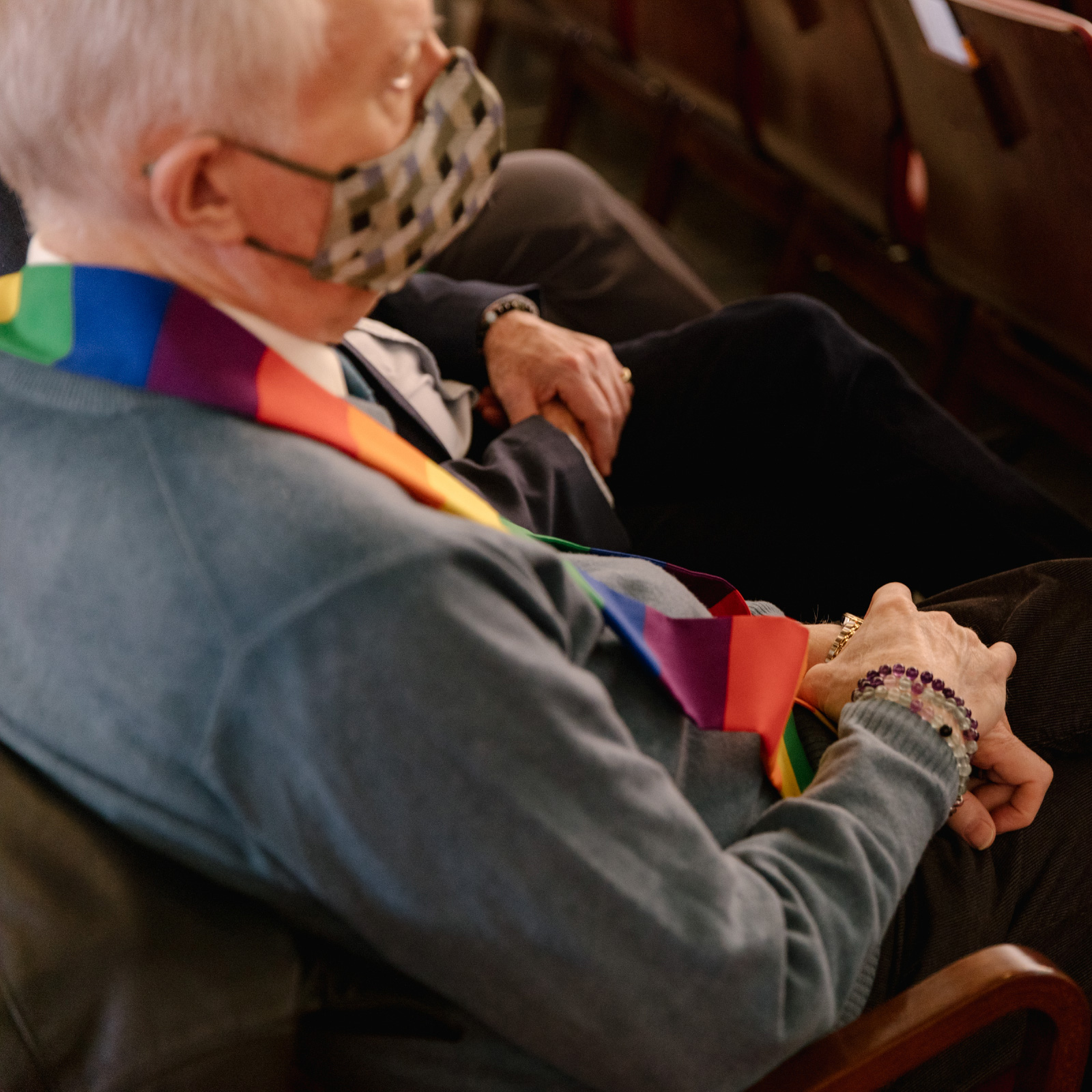
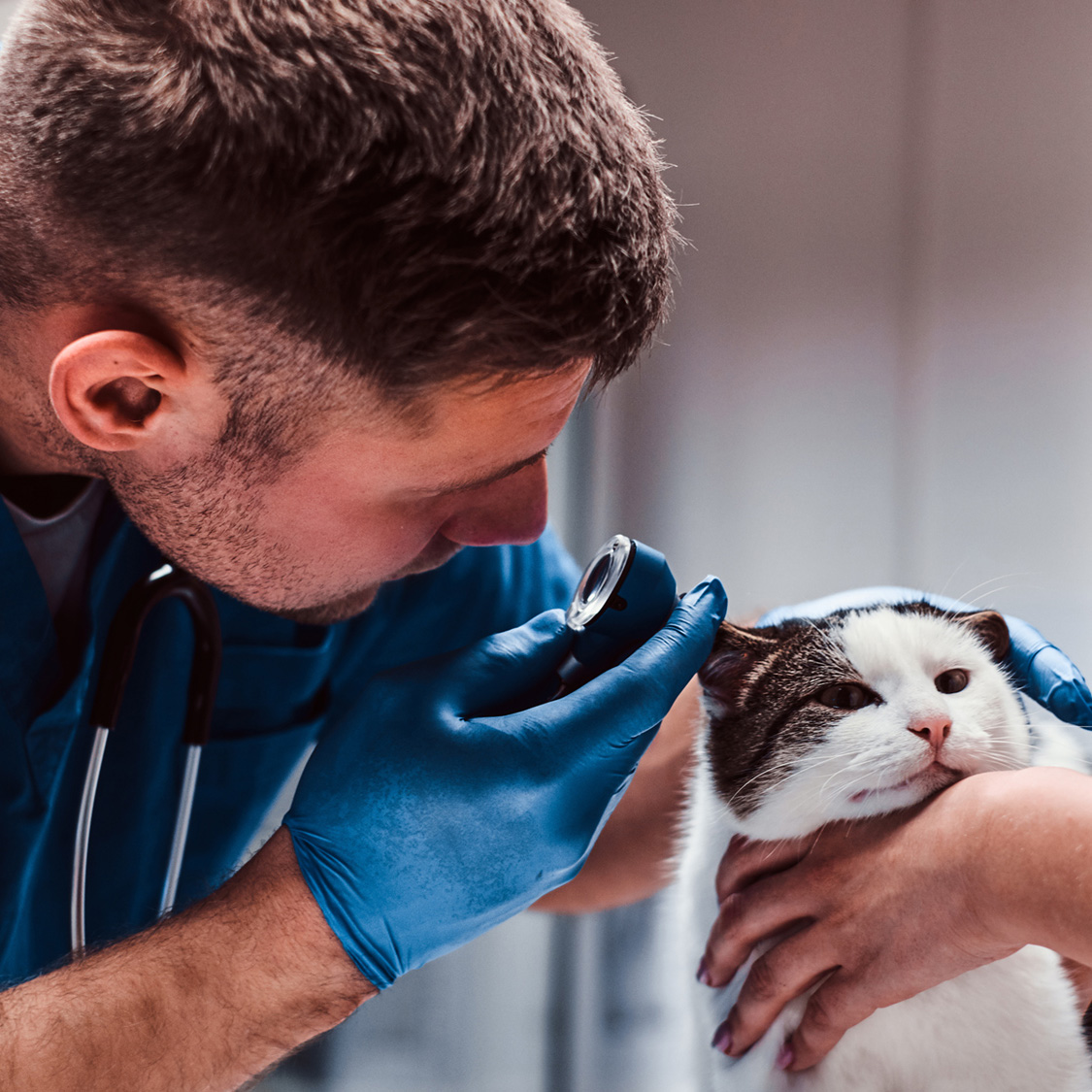
The old public picture of veterinary care no longer matched the people doing the work. The sector was moving through pandemic recovery, mental health strain, changing demographics, and a deeper reckoning with belonging and representation. OVMA was already inside meaningful organizational change, including equity, diversity, inclusion, and culture work with Empowered EDI. Our role was to help the values and brand process meet that broader transformation with care.
Yes, the ask was values and brand revitalization. But underneath that was a more human question: how could OVMA better understand, support, and reflect the people carrying veterinary care across Ontario?
We cared about this one for human reasons. We love animals, we have relied on veterinarians, and we know the feeling of sitting in a clinic with a creature you love, hoping the person across from you can help. We were also drawn to the representation gap at the heart of the project. The familiar public image of veterinary medicine had not kept up with the people actually shaping the profession. There was a chance here to help OVMA tell a fuller, more current, more human story.
So we started by listening. Not in a “please complete this stakeholder engagement exercise” way. In a get-in-the-car, go-to-the-clinic, sit-with-the-community kind of way.
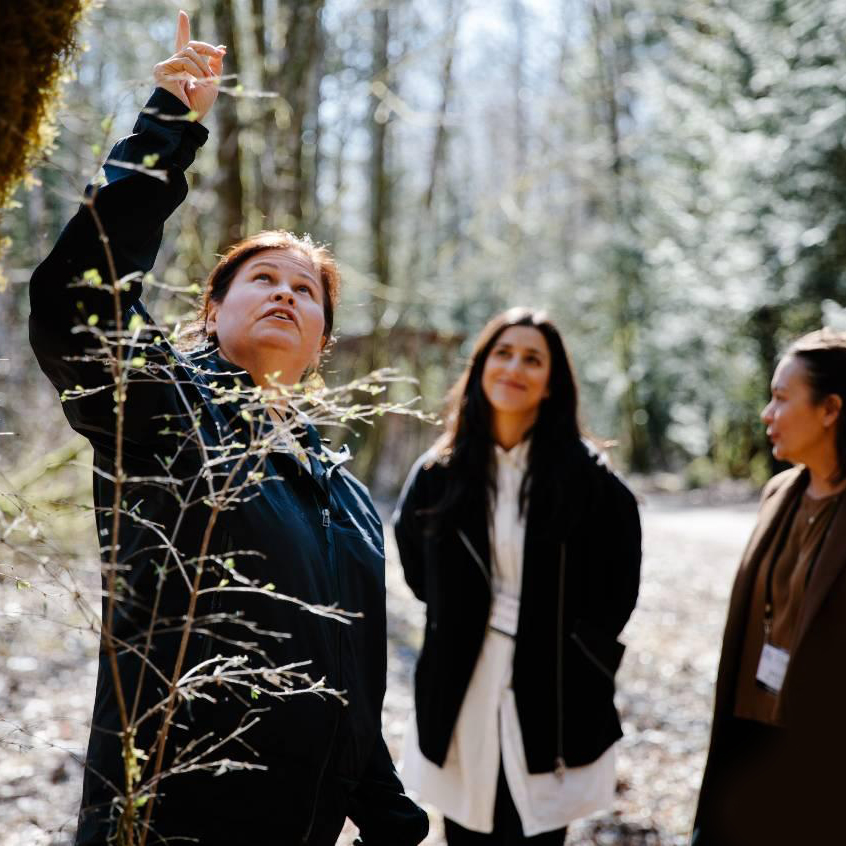
We spoke with OVMA leadership, staff, board members, veterinarians, veterinary technicians, sister organizations, EDI partners, students, sponsors, and people around the profession. We toured clinics. We drove through different parts of Ontario to better understand how veterinary care shows up in different contexts, from rural and equestrian practice to downtown clinics with a stronger social justice and community-care lens. We attended the OVMA conference to see how this community gathered, learned, laughed, and recognized each other when they were finally in the same room. The original project process included one-on-one interviews, sister organization interviews, clinic tours, values discovery, a board session, focus groups, deep reading, and conference immersion.
This was not opinion collection. It was pattern-finding with our feet on the ground.
And what we heard was layered. Veterinarians cared deeply about their work. For many, this was not simply a profession they had chosen, it was something they had wanted since childhood. It was part of their identity. We also heard how much they were carrying: the animal in front of them, the human who loved that animal, the emotional labour of care, the pressure to be certain, and the complexity of pricing, trust, communication, and public perception.
One veterinarian’s confession stayed with us:
“We’re not allowed to feel unsure.”
That line told us so much. It named the pressure underneath the polish. It helped us understand that OVMA’s brand could not just look more modern. It needed to create more room for the actual humans inside the profession.
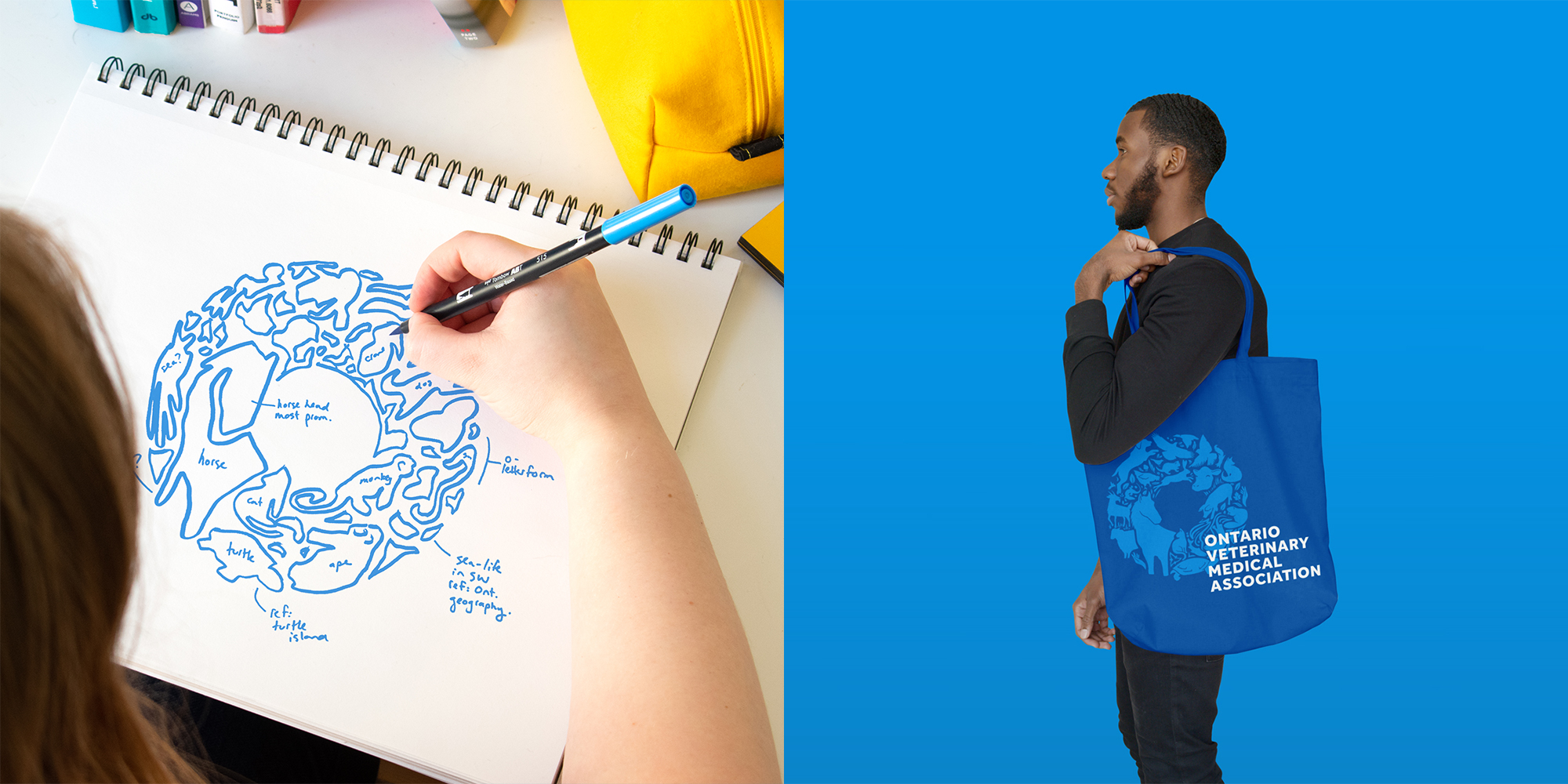
The OVMA identity grew from listening, iteration, and a willingness to let the work become more specific as more people helped shape it.
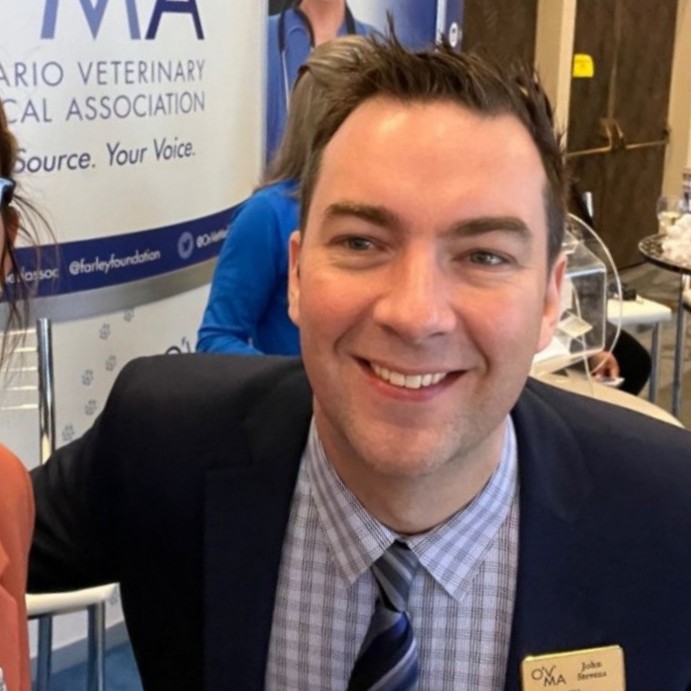
John Stevens, OVMA’s CEO, later named the heart of the shift clearly. The deepest part of the work was not the logo or brand itself. It was the exploration underneath it: who OVMA was as an organization, who its people were as human beings, and what principles could guide them forward.
In John’s words:
“A big part of this project was not about our logo or brand, but a deep exploration of who we are as an organization and as human beings who engage with and value the work that we do.”
That was the turn. The work had started as values and brand revitalization. It became a process of OVMA understanding itself more clearly.
From there, we moved into making. And here’s the honest part: our first creative direction did not fully land.
That matters because this project was not built on us performing certainty. It was built on trust. We had spent time helping the working group build creative confidence and a shared capacity to respond honestly, so when the first direction missed something, the room did not collapse. The process held.
We came back with a rougher, more vulnerable creative direction. A fledgling of an idea, really. The beginning of what would become the OVMA “O.”
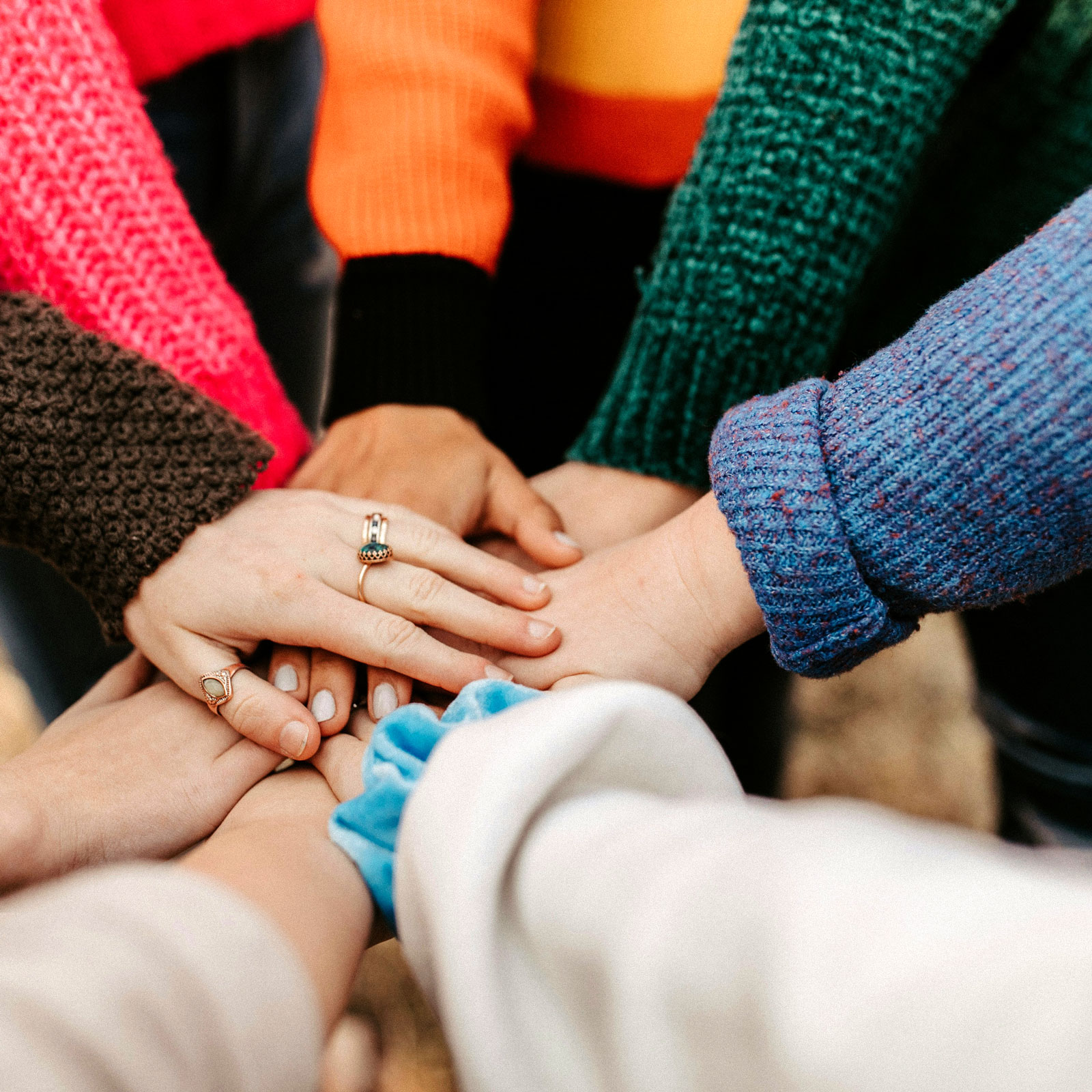
The mark brought together animals, human hands, Ontario geography, water, and the living world into one connected form. Veterinarians helped us understand how animals should be represented. Ecologists helped us think about which species actually belong in Ontario. Indigenous interviewees and the broader context of Turtle Island helped shape how we understood place and grounding.
The final identity gave visual form to interconnection: animal care, human care, community care, and care for the living world. The OVMA Brand Guide describes the icon as an “O” for Ontario and wholeness, made from animals, human hands, Ontario references, and symbols of the natural world, all flowing together to represent the interconnectedness of human, animal, and environmental health.
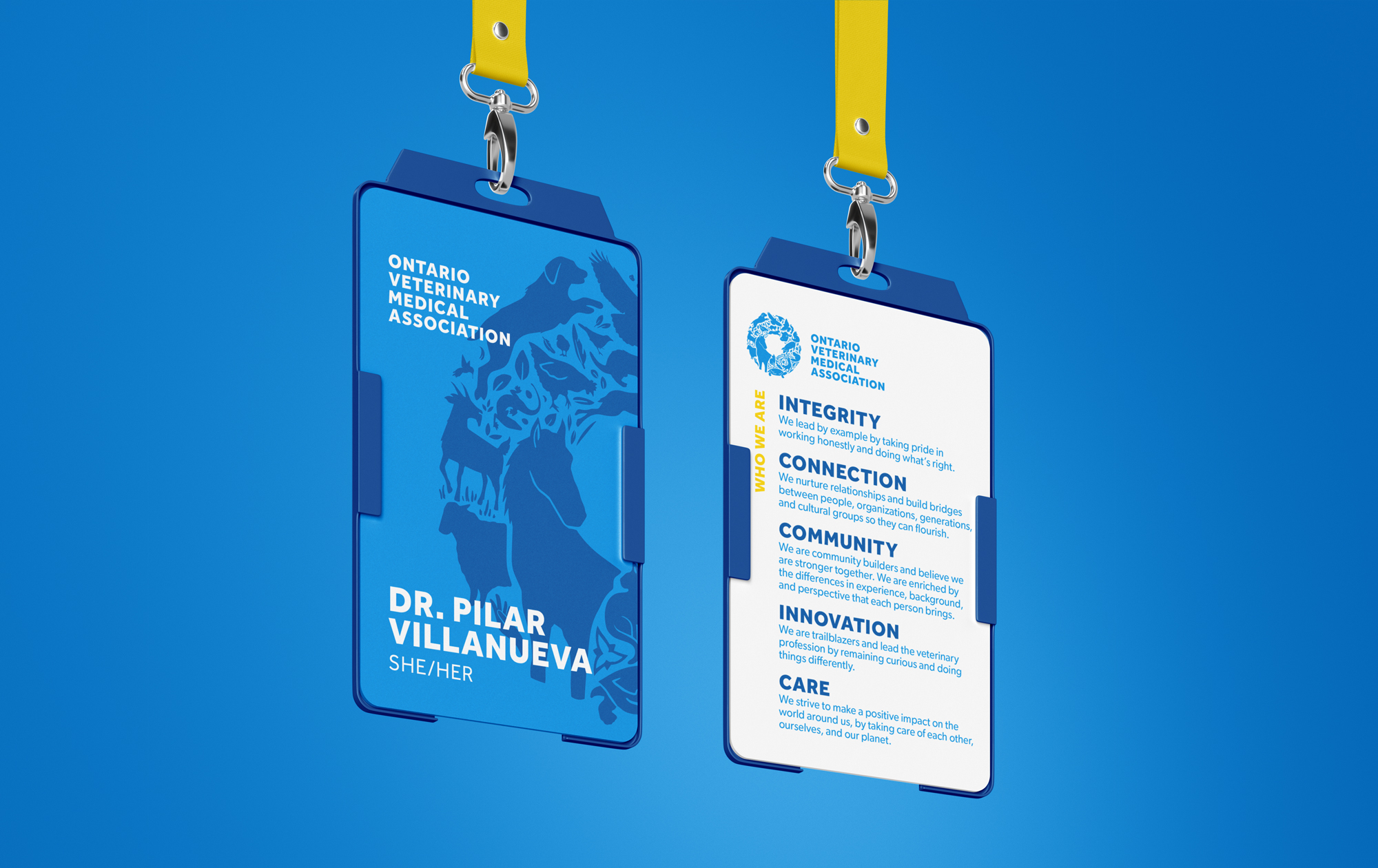
OVMA’s values, Integrity, Connection, Community, Innovation, and Care, became practical language members could encounter, carry, and use.
What We Made
- A clearer values framework
Integrity, Connection, Community, Innovation, and Care became practical language OVMA could use to guide decisions, communications, and shared identity. - A renewed brand position and voice
We helped OVMA speak with more warmth, honesty, and community focus, giving the organization clearer language for who it was, who it served, and why that work mattered. - A new visual identity
The refreshed OVMA mark and brand system brought together wholeness, Ontario, animals, human hands, water, and the living world. - Campaign and member-facing materials
We developed social templates, business cards, conference graphics, member lanyards, signage, subway ads, and organizational swag, helping the brand move into practical use. - A practical brand guide
The brand guide gave OVMA a clear, usable system for keeping the identity consistent across materials, messages, and everyday communications.
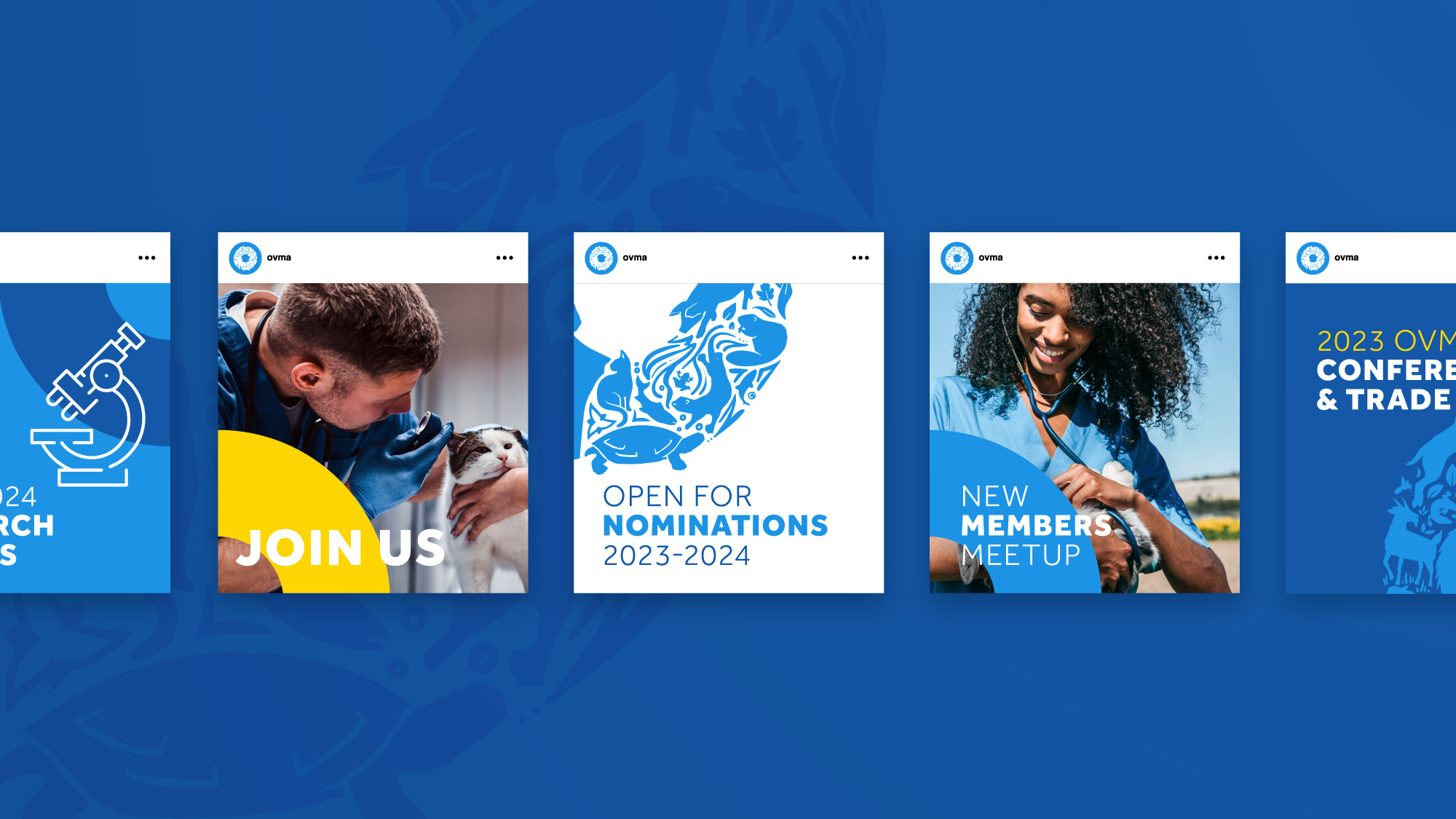
The OVMA brand system gave the organization a clearer way to show up across member communications, public storytelling, and everyday points of connection.
What Shifted
- More shared understanding
OVMA had clearer language for who it was, what it valued, and who it served. - More energy in the story
The brand helped the organization move from institutional expression toward something warmer, more current, and more alive. - More confidence in public communication
OVMA had a stronger way to talk about veterinarians as whole people, not just professionals. - More visible connection
The identity gave form to the relationship between veterinarians, animals, clients, communities, and the natural world. - More alignment around the work
The process helped the team move with more trust, creativity, and shared direction, so the new brand had momentum from the start line.
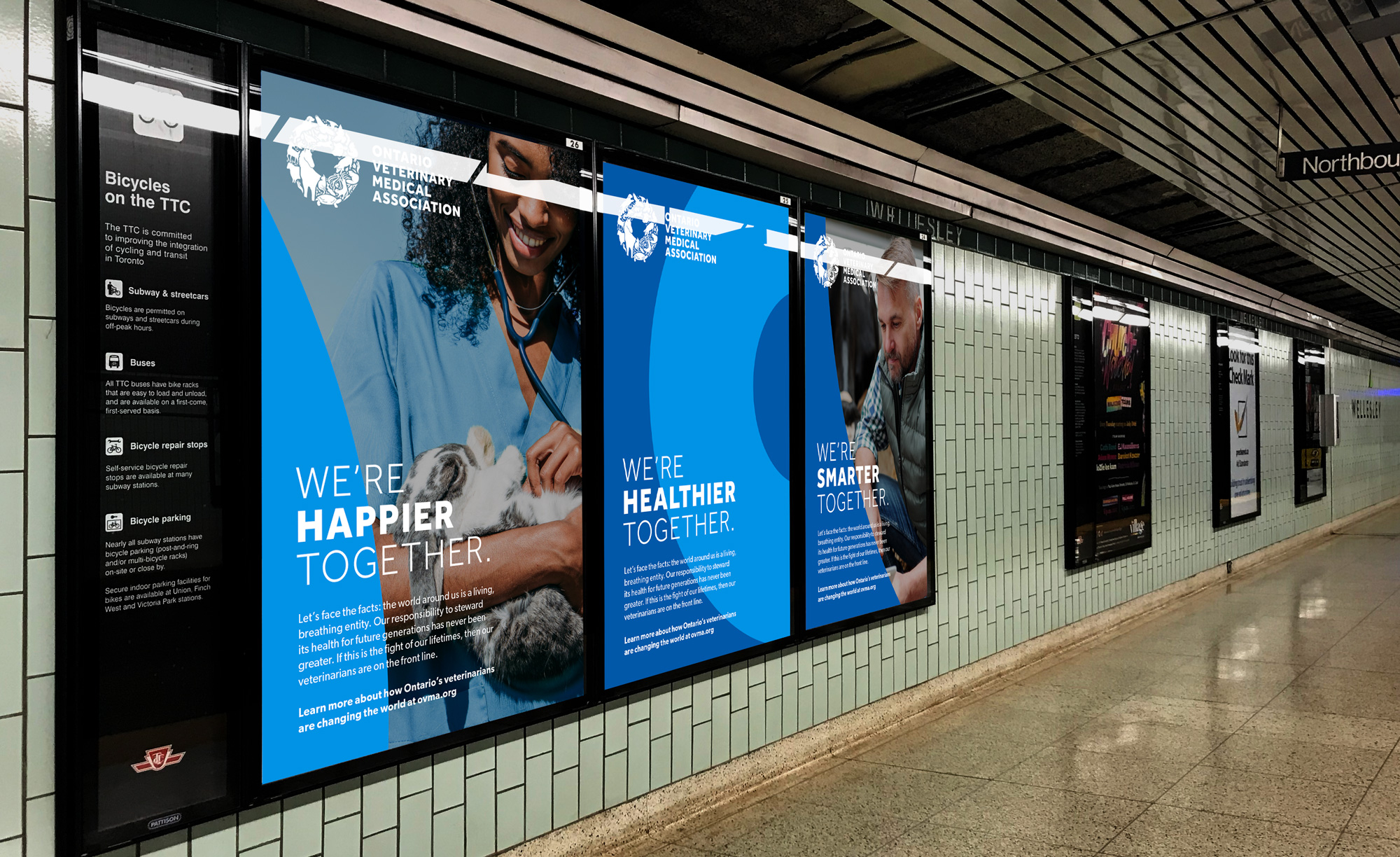
The renewed OVMA identity moved beyond internal alignment and into public expression, helping the organization share a clearer story about veterinary care in Ontario.
OVMA reminds us why we still believe in brand work when it is done this way. Not brand as surface. Not brand as polish. Brand as a way for people to understand themselves, reconnect with the communities they serve, and make that connection visible.
John said it beautifully:
“For organizations who not only want to be understood, but to better understand themselves, Harc has been a great partner in this journey.”
That’s the kind of work we keep saying yes to: work where the ask begins with a brand, a story, a set of values, or a visual identity, but the real invitation is deeper.
Help us understand who we are now.
Help us recognize the people we are here to serve.
Help us make that connection easier to see.